
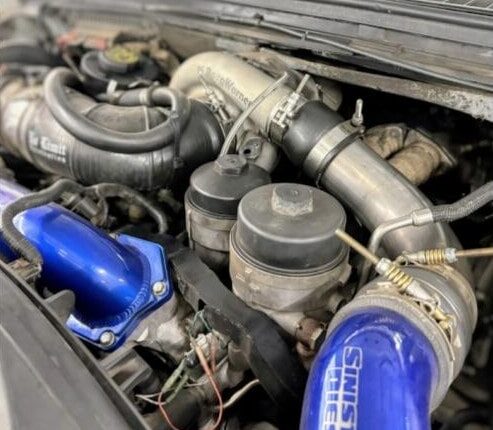
If you use your truck for towing, hauling, commuting, or exploring Central Oregon, you may eventually consider diesel performance tuning. A well-developed tune can make a healthy truck feel stronger and more responsive. It can improve how power is delivered, help the transmission behave more effectively under load, and complement other diesel performance upgrades.
But tuning is not magic software. It cannot repair a failing turbocharger, worn injectors, weak transmission, or neglected maintenance.
Understanding that difference is important. The right tune can help you get more from your truck. The wrong tune, or tuning a truck with an existing problem, can make an expensive repair even more expensive.
What a Diesel Tune Actually Changes
Modern diesel trucks use computers to control nearly every part of engine operation. Depending on the truck, the engine control module (ECM) and transmission control module (TCM) manage fuel delivery, injection timing, turbocharger operation, torque limits, throttle response, and gear changes.
A tune changes the calibration software inside those modules. It does not replace the engine’s physical components.
Depending on the application, a calibration may adjust:
- Fuel quantity and injection timing
- Turbocharger boost targets
- Electronic throttle or pedal response
- Torque limits at different engine speeds
- Shift points and shift timing
- Transmission line pressure
- Engine braking behavior
- Power delivery in towing or performance modes
The goal is to make the factory hardware work differently within a carefully considered set of limits. That may mean producing more torque at a useful engine speed, reducing unnecessary throttle delay, or helping the truck hold a gear more consistently on a hill.
A tune is best viewed as a calibration change, not a mechanical repair.
What a Good Tune Can Do for Your Truck
Improve usable power and torque
Many truck owners are not looking for a drag-racing setup. They want their truck to pull a trailer with less effort, merge into traffic more confidently, or maintain speed on Central Oregon grades without constantly shifting.
Diesel performance tuning can reshape the torque curve so power arrives where you use it most. A towing-oriented calibration may prioritize controlled low-end torque and predictable power delivery. A performance calibration may provide a sharper response and stronger acceleration.
The result depends on the truck’s year, engine, transmission, current modifications, and intended use. There is no single tune that is ideal for every driver.
Sharpen throttle response
Some diesel trucks feel sluggish when you first press the accelerator, particularly when operating at low engine speed or under load. Calibration changes can make the pedal feel more immediate and reduce the sensation of waiting for the truck to respond.
That does not necessarily mean the engine is producing dramatically more power at every moment. Sometimes the biggest improvement is simply more consistent, predictable response when you need to accelerate or control the truck on a trail.
Improve towing behavior
A properly matched engine and transmission calibration can make towing feel smoother. The truck may hold a gear more effectively, reduce unnecessary shift hunting, or deliver torque in a way that feels easier to manage with a trailer attached.
However, towing performance still depends on fundamentals such as trailer weight, gearing, cooling system condition, transmission health, tire selection, and braking capacity. A tune cannot make an overloaded or poorly maintained truck safe.
Complement other diesel performance upgrades
A tune can be part of a broader build that includes improved airflow, an upgraded exhaust system, turbocharger work, or fuel-system improvements. But modifications need to work together.
For example, adding more fuel without ensuring the engine has enough air and cooling capacity can create excessive heat or stress. Installing hardware without calibrating the truck appropriately can also produce disappointing or inconsistent results.
That is why diesel performance upgrades should be planned as a system rather than purchased one part at a time based on advertised horsepower claims.
What a Tune Will Not Fix
This is where honest diesel service matters most. If your truck has an underlying mechanical or electrical problem, tuning is not the solution.
A tune will not repair:
- A restricted fuel filter or contaminated fuel system
- Failing injectors or a weak high-pressure fuel pump
- A turbocharger with worn bearings, damaged blades, or sticking components
- Low engine compression
- A leaking head gasket
- A malfunctioning sensor or wiring problem
- A plugged air filter or restricted intake
- A slipping or mechanically damaged transmission
- Overheating caused by a faulty cooling system
- A failed EGR, DPF, DEF, or related emissions component
In some cases, adding power to a troubled truck can expose the problem more quickly. A weak transmission may slip under increased torque. A marginal cooling system may struggle under heavier load. A turbocharger that is already failing may become louder or lose control of boost.
That is not the tune “breaking” a healthy component. It is a sign that the component was already operating near the edge of its capabilities.
Diagnostics Should Come Before Tuning
Before discussing a calibration, the truck should be evaluated as a complete vehicle. This is where diesel engine diagnostics are essential.
A proper evaluation may include checking fault codes, reviewing live data, inspecting the intake and exhaust systems, and assessing the engine and transmission under realistic conditions. Depending on the symptoms and truck, a technician may also need to evaluate fuel pressure, boost behavior, exhaust temperatures, fluid condition, and cooling performance.
You should also be prepared to discuss how you actually use the truck:
- Do you tow regularly or only occasionally?
- Is the truck a daily driver, work truck, or off-road vehicle?
- Do you carry heavy equipment or drive long highway distances?
- Are you running larger tires or other modifications?
- Is fuel economy, towing response, or maximum power your priority?
Those answers help determine whether tuning is appropriate and which calibration approach makes sense.
A healthy truck with current maintenance is the right starting point. Fresh fluids, clean filters, properly functioning sensors, and a sound transmission are not optional extras when you are asking the vehicle to work harder.
Platform-Specific Considerations
Every diesel platform has its own strengths, common concerns, and calibration requirements. Experience with one engine does not automatically translate to every truck.
At Performance Authority, our team regularly works with major diesel platforms, including:
The same power increase can affect each platform differently. Engine configuration, transmission type, model year, emissions equipment, factory torque management, and existing modifications all matter.
That is also why generic claims such as “gain a certain amount of horsepower on every truck” should be treated cautiously. Your truck may respond differently from another truck with the same engine family. A responsible approach accounts for those differences instead of promising a result before the vehicle is inspected.
Tuning and Reliability: The Honest Answer
Will tuning shorten your engine’s life? There is no universal yes-or-no answer.
A conservative calibration on a well-maintained truck, matched to its hardware and use, may provide useful performance without creating unreasonable stress. An aggressive calibration on a truck with poor maintenance, inadequate cooling, a weak transmission, or unsuitable supporting parts is a different situation.
Reliability depends on how much additional load the entire vehicle can handle: not just what the engine can produce for a short period. Your driving habits matter, too. Repeated heavy towing, high temperatures, hard acceleration, and extended high-load operation place more demand on the engine, turbocharger, fuel system, drivetrain, and cooling system.
The most dependable build is usually the one designed around your real needs. If you tow a camper through the Cascades, your priorities may be different from those of someone building a weekend trail truck or a work truck that spends every day hauling equipment.
When Diesel Performance Tuning Makes Sense
Tuning may be worth considering if:
- Your truck is mechanically healthy
- You want more usable towing or hauling response
- You understand the effect of added torque on the drivetrain
- Your current modifications are properly matched
- You are willing to maintain and monitor the truck
- The calibration is selected for your actual driving needs
It may not be the right first step if your truck has warning lights, hard starting, rough running, unusual smoke, poor fuel economy, overheating, transmission slipping, or a sudden loss of power. Those symptoms call for diagnosis before performance changes.
If you drive a gas truck, the same principle applies. Performance upgrades should begin with a healthy vehicle and a clear purpose. Better response or capability comes from matching the repair, maintenance, hardware, and calibration to the way you use the truck.
Choose a Tune Based on Facts, Not Hype
Diesel performance tuning can be a worthwhile upgrade, but only when it is treated as part of responsible truck care. A tune changes how the ECM and, in some cases, the transmission control system manage the factory hardware. It can improve response, torque delivery, towing behavior, and overall drivability.
It cannot replace worn parts, solve neglected maintenance, or hide a mechanical problem.
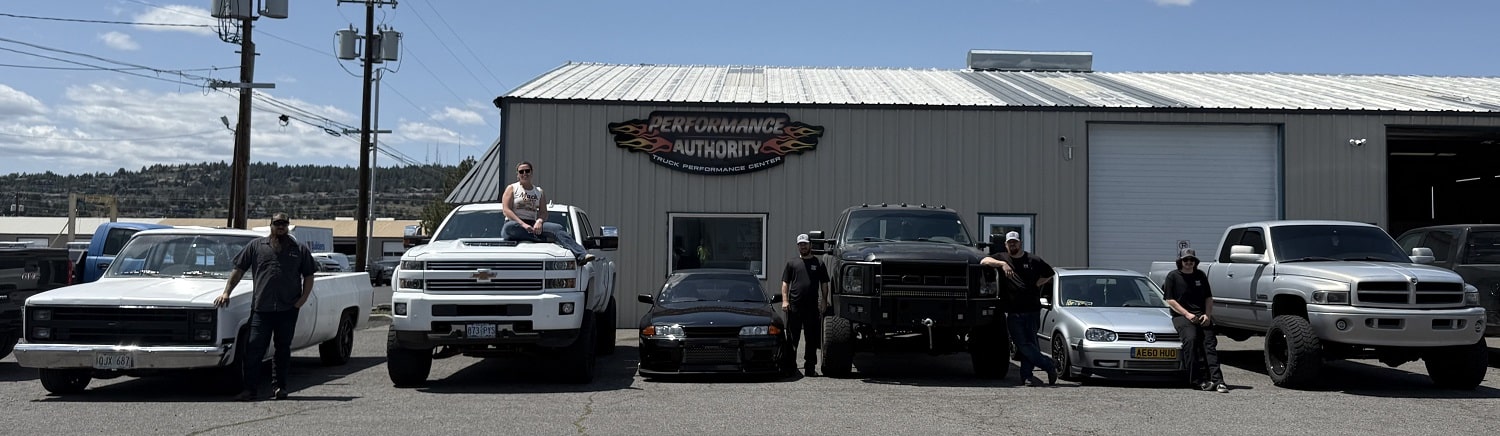
At Performance Authority, we have served Bend and Central Oregon for more than 25 years. Our approach is straightforward: inspect the truck, understand your goals, explain what is realistic, and recommend only the work that makes sense. Whether you drive a Cummins, Power Stroke, Duramax, gas truck, or a work fleet, our team can help you evaluate truck performance upgrades with total transparency.
If you are considering a tune, start with a conversation and a proper vehicle assessment. Contact Performance Authority to schedule service in Bend and find out what your truck is ready for: and what it needs first.